Is ColdFusion Still Relevant in 2026? Best Practices for Ongoing Development & Careers
Published by: Gautham Krishna RJan 15, 2026Blog
The question of ColdFusion's relevance often arises from a perception that it's a legacy technology. The reality for 2026 is more nuanced: while not the buzzword of Silicon Valley startups, ColdFusion maintains a critical and stable presence in key enterprise sectors. For developers, this translates into a specialized, in-demand career path with less competition and strong job security. Adobe's consistent release cycle, including the recent 2025 update, demonstrates an active investment in keeping the platform modern with cloud, security, and performance features.
The conversation shifts from "Is it dead?" to "Where does it thrive?" ColdFusion's strength lies in maintaining and modernizing mission-critical business applications in finance, healthcare, government, and education. These are systems where reliability, rapid development for internal tools, and deep database integration are paramount. For businesses, the cost and risk of rewriting decades of stable business logic in another language are prohibitively high, ensuring ongoing demand for skilled CFML developers.
The 2026 Landscape: Where ColdFusion Developers Are Essential
Enterprise Modernization, Not Just Maintenance
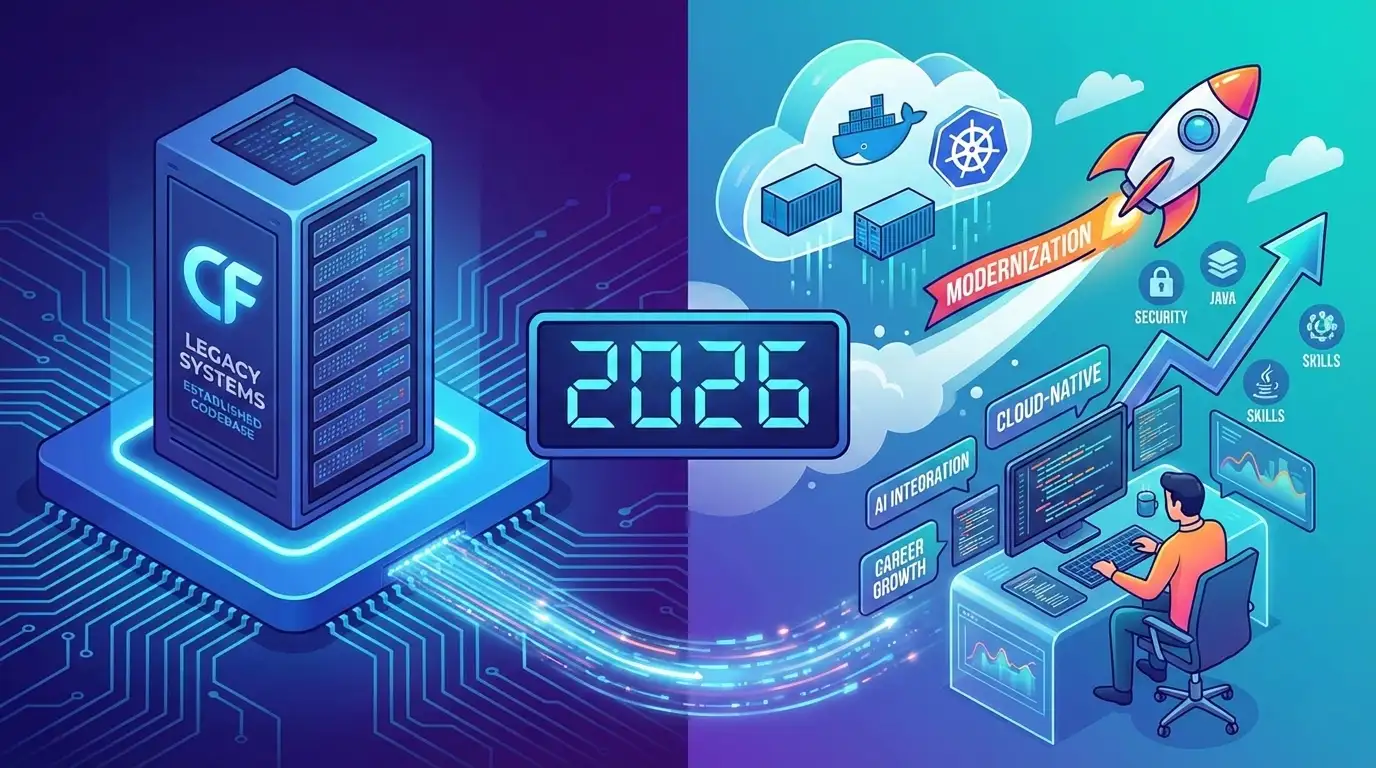
The primary driver for ColdFusion work in 2026 is strategic modernization. Companies aren't just keeping the lights on; they are actively upgrading legacy CF applications to modern architectures. This involves:
- Containerization & Cloud Migration: Moving monolithic CF apps to Docker and Kubernetes for scalability and DevOps efficiency.
- API-First Refactoring: Exposing core business logic as RESTful or GraphQL APIs to enable modern JavaScript frontends (React, Vue.js).
- Security Hardening: Implementing modern practices with the latest ColdFusion versions, which offer enhanced security protocols and regular patches.
This work requires developers who understand both legacy CFML code and modern architectural principles--a rare and valuable combination.
A Career with Less Noise and More Niche Value
The ColdFusion job market operates differently from the broader web development field. It is characterized by:
- Lower Competition: With fewer new developers entering the space, experienced CF professionals face less competition for roles.
- Higher Value Perception: Developers who can navigate complex, business-critical legacy systems and guide their modernization are viewed as strategic assets, not just cost centers.
- Strong Contract & Remote Opportunities: Many organizations seek specialized contractors or remote teams for modernization projects, offering flexibility and high rates.
Specialized development firms that excel in this niche, like Evalogical, recognized as a top ColdFusion development company, are often at the forefront of these complex projects, providing career opportunities for developers who enjoy deep technical challenges.
Building a Future-Proof ColdFusion Career in 2026
To thrive as a ColdFusion professional today, your skillset must extend beyond classic CFML tags. Here is a matrix of the evolving skills employers seek:

FAQs:
Q: Are ColdFusion developers still in demand, and what do they earn?
A: Yes, demand remains steady in enterprise sectors. Due to the specialized nature and lower supply of developers, senior ColdFusion developers often command salaries on par with or above senior full-stack developers in more common languages, especially when paired with modern DevOps or cloud skills. Contract rates can be particularly strong for migration and modernization projects.
Q: I'm a junior developer. Should I consider learning ColdFusion in 2026?
A: It can be a strategic niche choice. Entering the ColdFusion space now means less competition and a clearer path to working on complex, business-critical systems. The key is to learn it alongside modern complementary skills like Docker, API design, and a frontend framework. This "T-shaped" skill profile makes you highly valuable for modernization projects.
Q: How do I transition from a legacy CFML coder to a modern CF engineer?
A: Start by mastering a modern CFML framework (ColdBox is the leading choice). Then, focus on one adjacent modern skill:
- Containerization: Learn to package a CF app with Docker.
- Automation: Set up a simple CI/CD pipeline for it.
- APIs: Refactor a piece of legacy logic into a clean REST API.
- This hands-on approach builds a compelling portfolio for your next role or project.
Q: Where are the best ColdFusion job opportunities found?
A: Look beyond generic job boards:
- Specialized Firms: Companies like Evalogical that specialize in enterprise modernization.
- Enterprise Verticals: Directly with companies in finance, insurance, healthcare, and government.
- Networking: Engage with the active ColdFusion community online (CFML Slack, forums). Many opportunities are filled through word-of-mouth and reputational networks.
Q: What's the biggest misconception about ColdFusion careers?
A: That it's only about maintaining old code. The most rewarding and well-compensated work in 2026 is greenfield development within legacy ecosystems (building new microservices) and leading application modernization. It's a role that combines technical depth with strategic business impact.
ColdFusion in 2026 remains a strong choice for developers seeking stability, deep expertise, and long-term impact by blending CFML fundamentals with modern architectures.



 What Is Creatio CRM? A Practic....
 Salesforce vs. Creatio: Which ....
 How AI Improves Field Sales Pl....
 How Malaysian Enterprises Can ....
 The 2027 Guide to BNM RMiT Com....



Your Trusted Software Development Company