AI-Powered Account Prioritization: How to Rank & Tier Accounts for Smarter B2B Sales Coverage
Published by: Abhilash AnandanAug 14, 2026Blog
Sales organizations face a fundamental challenge: not all accounts are created Consider a typical regional sales operation. A Sales Operations Manager reviews an account list, trying to determine which accounts deserve Tier 1 coverage. The decision has significant implications--resource allocation, sales focus, marketing investment, and ultimately revenue outcomes all hinge on getting this right. The problem? Too often, these decisions rely on intuition rather than consistent, data-driven analysis. Industry analysts have observed that sales leaders are Industry a that sales leaders are increasingly turning to AI-driven approaches to solve this challenge, moving beyond traditional, static segmentation toward more dynamic, signal-based prioritisation that helps sellers focus on the right accounts at the right
AI-powered account prioritization addresses these challenges by analyzing multiple account signals--engagement history, open opportunities, conversion indicators, revenue potential, growth trajectory, and strategic fit--to produce consistent, explainable tier recommendations.
Why Traditional Account Prioritization Falls Short:
Experience is valuable. Seasoned sales representatives often develop strong instincts about which accounts matter most. But relying on individual judgment alone creates significant challenges for sales organizat Prioritization.
Different representatives apply different criteria. One might prioritize based on relationship strength, while another emphasizes deal size, and a third focuses on ease of access. These variations make it nearly impossible to maintain consistent account coverage across regions or territories.Moreover, sales teams change Representatives leave, territories shift, and institutional knowledge about account importance can disappear overnight. When prioritization lives primarily in individual reps' heads, organizations lose that intelligence when people move on.
Account Size Alone Isn't Enough
Many organizations default to account size as their primary prioritization criterion. Larger accounts, the thinking goes, should receive more attention.
Consider two accounts with similar revenue potential. One is actively engaged, showing strong growth signals, and has a buying committee evaluating new solutions. The other is static, difficult to reach, and shows no signs of change. These accounts deserve different levels of attention, yet traditional segmentation based solely on size would treat them similarly.
Effective account prioritization should evaluate multiple signals. When account prioritization lacks consistency, organizations pay a price in both visible and hide
Sales capacity is misallocated. Representatives spend disproportionate time on lower-value accounts while high-potential accounts remain under-resourced. This isn't just an efficiency problem--it's a revenue problem. Industry research on AI-driven sales organizations suggests that account intelligence can help teams identify next-best opportunities more effectively, but typically only when the underlying prioritization framework is robust enough to distinguish between accounts that merely look large and those that truly represent strategic opportunities. Pipeline quality suffers. When prioritization is inconsistent
the quality of accounts entering and moving through the pipeline becomes uneven. Strategic accounts may not receive the differentiated coverage they need to progress efficiently.
What Should Determine Account Priority?
Before exploring how AI can support account prioritization, it's worth establishing what factors should influence account priority in the first place.
Revenue Potential
Revenue potential is the most obvious signal--but it requires nuance. Current revenue isn't the same as future revenue potential. A large, static account may offer less growth potential than a smaller, rapidly expanding one.
Engagement Signals
Engagement signals indicate the depth and quality of the relationship between your organization and the account. Strong engagement suggests the account is receptive to outreach and may be more likely to consider new solutions.
Growth Signals
Growth signals indicate that an account is changing--and those changes may create new opportunities.
- Hiring patterns, particularly in relevant functions
- Executive changes or leadership transitions
- New product launches or market expansions
- Mergers, acquisitions, or restructuring
- Growth in revenue, headcount, or geographic footprint
- Technology stack changes or modernization initiatives
Open Opportunities
- Deal size and strategic importance
- Deal stage and velocity
- Competitive involvement
- Decision-maker engagement
- Buying committee composition
Conversion Signals
Conversion signals provide insight into how likely an account is to convert from an opportunity into closed business. Historical conversion patterns can be powerful predictors of future performance.
Consider:
- Historical win rates by account segment
- Similar accounts' conversion patterns
- Buying cycle length and progression
- Procurement and legal process involvement
- Approval requirements and complexity
Strategic Fit
Strategic fit determines whether an account is worth pursuing regardless of its revenue potential. Some accounts serve strategic purposes beyond immediate revenue--for example, reference accounts that can validate your solution in a specific industry.
An Account Priority Framework

Consider the following editorial framework for evaluating account priority:
High Revenue Potential + High Engagement = Immediate Priority
These accounts represent both opportunity and readiness. They deserve the highest level of sales attention, executive engagement, and marketing coordination.
High Revenue Potential + Low Engagement = Develop/Nurture
These accounts are strategically important but not yet engaged. They need thoughtful nurturing and multi-channel engagement to build relationships.
Low Revenue Potential + High Engagement = Evaluate Efficiency
These accounts are engaged but may not represent significant revenue.
Consider whether the engagement level is proportionate to the opportunity.
Low Revenue Potential + Low Engagement = Lower Coverage
These accounts require limited attention unless they begin showing signals that
Signal-based prioritization is not without limitations, and a balanced view matters as much as the framework itself. Newer accounts with little historical data can be harder to score accurately, since there is less activity for the model to learn from. There is also a risk that a framework trained primarily on past wins will favor accounts that resemble existing customers, potentially underweighting promising accounts in new segments or industries. For this reason, tier recommendations should be treated as a starting point for review rather than a final decision, particularly during the first few review cycles.
How AI Changes Account Prioritization
Traditional account prioritization relies on manual analysis and subjective judgment. AI changes this dynamic by analyzing account data systematically and surfacing patterns that might otherwise go unnoticed.
Analyze Account Profiles
AI can analyze comprehensive account profiles, pulling together information from multiple sources to create a complete picture of each account. This goes beyond simple CRM records to incorporate:
Bring Account and Contact Insights Together
Account prioritisation shouldn't happen in isolation from contact-level intelligence. Understanding who at the account is engaged--and at what level--provides crucial context for prioritization decisions.
- AI can surface insights about:
- Executive engagement and relationship depth
- Buying committee composition and influence
- Contact-level interactions and responsiveness
- Champion identification and advocacy
Surface Conversion Insights
Conversion insights help organizations understand what's working--and what isn't--in their account engagement strategies. AI can analyze historical conversion patterns to identify signals that typically precede successful outcomes.
These insights help refine prioritization criteria based on what actually drives conversion, rather than assumptions about what matters.
Summarise Activity and Opportunities
Sales representatives generate enormous volumes of activity data. AI can summarize this information, providing concise overviews of account engagement, opportunity progress, and relationship health.
Activity summarization reduces the cognitive load on sales operations teams, helping them assess account status quickly without digging through extensive activity histories. Opportunity summarization provides similar value for deal context, highlighting:
- Deal stage and progression
- Key deal risks and challenges
- Competitive positioning
- Stakeholder engagement
- Next steps and timeline:
- News coverage and press releases
- Job postings and hiring activity
- Regulatory filings and financial reports
- Industry awards and recognitions
- Executive changes and leadership announcements
From Account Analysis to Account Tiering
Account intelligence becomes valuable when it translates into operational decisions. Account tiering is the mechanism that connects analysis to action.
What Is Account Tiering?
Account tiering is the process of grouping accounts into priority levels based on business value and strategic importance. While specific definitions vary, a common framework includes:
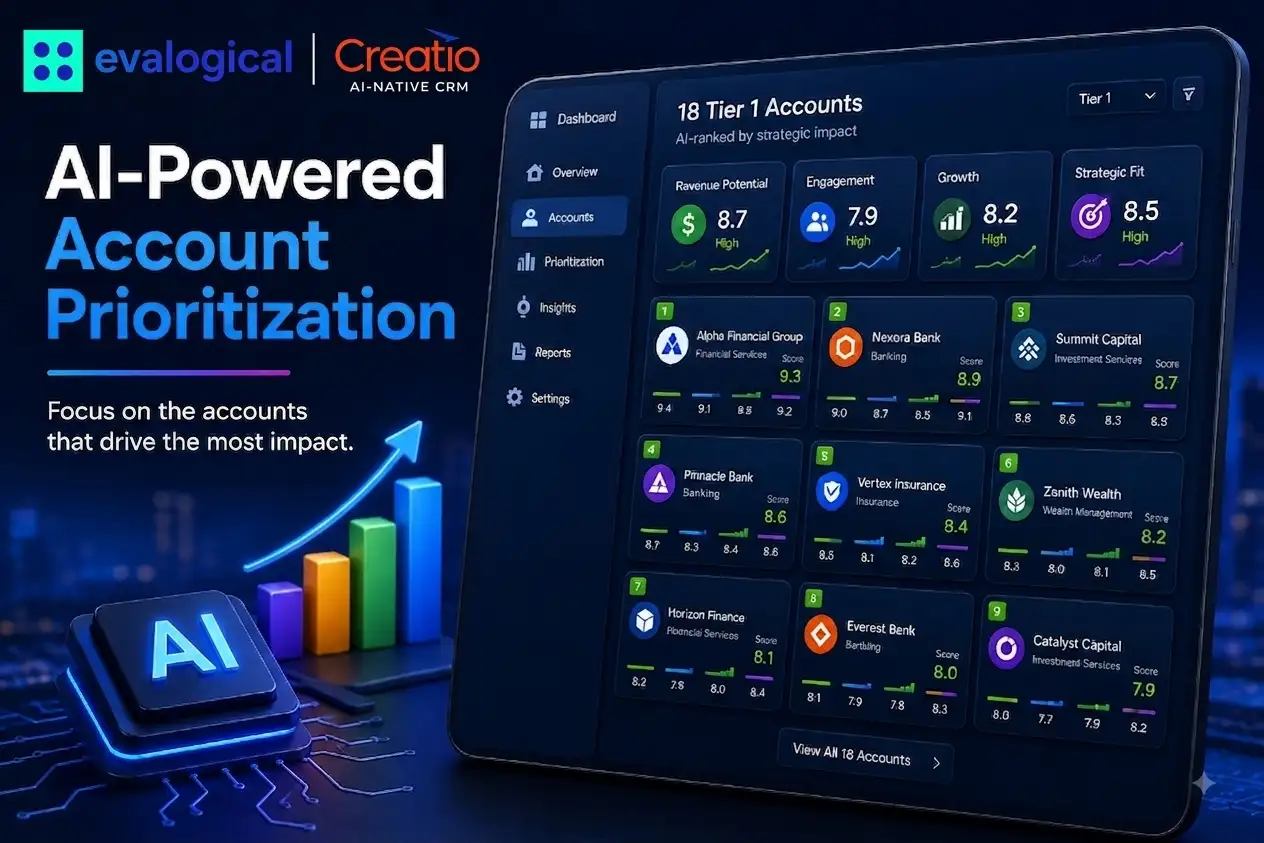
Tier 1: Strategic Accounts
These accounts represent the highest revenue potential, strongest strategic fit, and greatest growth opportunity. They typically receive differentiated coverage, executive engagement, and comprehensive account planning.
Tier 2: Growth Accounts
These accounts are important but may not meet the threshold for Tier 1. They receive focused coverage, regular account reviews, and coordinated sales and marketing support.
Tier 3: Transactional Accounts
These accounts require standard coverage and are typically addressed through more efficient, scalable sales motions rather than high-touch account management.
Why Tier 1 Accounts Need Differentiated Coverage
The purpose of tiering isn't just classification--it's resource allocation. Accounts in Tier 1 should receive differentiated coverage that reflects their strategic importance. Differentiated coverage might include:
- Dedicated account teams
- Executive sponsorship and regular executive engagement
- Comprehensive account planning
- Coordinated sales and marketing investment
- Accelerated deal support and approval
- Strategic partnerships and customer success involvement
A Sales Operations Manager at a B2B enterprise needs to review the Central region account list and identify which accounts should move to Tier 1.
Traditionally, this would involve manually reviewing each account record, searching for engagement history, analyzing opportunities individually, comparing accounts subjectively, making prioritization decisions, and preparing explanations for sales leadership--a slow, inconsistent process that is difficult to repeat the .
With an AI-supported approach, the system instead analyzes account profiles, engagement history, open opportunities, conversion signals, growth indicators, and strategic fit together, and surfaces a small number of accounts as strong Tier 1 candidates along with the reasoning behind each recommendation.
For one account in this walkthrough, the supporting signals behind a Tier 1 recommendation might include:
- Stronger engagement than comparable accounts in the region
- Higher revenue potential than the account's current tier reflects
- Strong fit with the ideal customer profile
- Expansion potential across additional business units
- An active buying committee
- An open enterprise opportunity
- Recent growth signals, such as hiring in relevant functions
The Sales Operations Manager reviews this recommendation, checks it against context the system may not have (such as a recent difficult renewal conversation), and either confirms the tier change or adjusts it. That review step matters: the goal isn't to replace sales judgment with technology, but to make judgment more consistent and evidence-based, and to give leadership a clear rationale they can stand behind when resourcing decisions are questioned.
How Creatio Supports AI-Driven Account Prioritization
Creatio.ai, the AI layer built into the Creatio platform, includes several documented capabilities that map directly to the framework above. The capabilities below reflect Creatio's current public documentation and product pages; as with any platform, they should be re-confirmed at project scoping time, since AI capabilities are an area of active vendor investment and change quickly.

Account News and Insights
Creatio.ai can automatically deliver relevant news and insights for up to 50 accounts on a weekly or monthly cadence, covering developments such as news coverage, hiring activity, and other account signals. This helps sales and account teams react faster to changes and prepare more informed outreach without spending time on manual research.Predictive Next-Best-Action
Creatio.ai's predictive AI capabilities are designed to recommend next-best actions for a sales opportunity based on historical data and engagement patterns--functionality that can directly support the kind of conversion and readiness signals
Opportunity and Deal Summarisation
Creatio.ai can generate deal insights, opportunity summaries, and recommended next steps directly inside the CRM record, reducing the time sales operations teams spend piecing together opportunity context from activity histories.
Natural-Language Workflow and Data Interaction
Creatio also supports natural-language interaction for building and adapting CRM workflows, and for querying and summarizing account data through its Creatio.ai chat interface--lowering the technical barrier for sales operations teams who want to interact with account data without deep platform expertise.
Two capabilities occasionally referenced in AI-prioritization discussions--purpose-built "account profiling" and "account conversion insights" as distinct named features--were not confirmed as current, separately-branded Creatio capabilities at the time of writing. The underlying outcomes (a consolidated account view, and conversion-pattern analysis) are addressed through the predictive and summarisation capabilities above; any project scope referencing those specific feature names should be validated directly with Creatio or an implementation partner before being included in customer-facing material
Data and Architecture Considerations for IT and CTO Stakeholders
Account prioritisation is only as reliable as the data feeding it, which makes this as much an architecture question as a sales question. Before scoring accounts, IT and CTO stakeholders typically need clarity on a few things: which systems are the source of truth for engagement, revenue, and opportunity data; how account and contact records are deduplicated and kept consistent across CRM, marketing automation, and finance systems; what access and governance controls apply to AI-generated recommendations and any external enrichment data; and how the organization will monitor recommendation quality over time rather than treating the initial configuration as final. Addressing these questions early tends to shorten implementation time reduce later.
How Evalogical Helps Organizations Get This Right
Configuring the technology is rarely the hardest part of a project like this. In our experience helping organizations implement account intelligence and tiering within Creatio, the biggest determinant of success is usually the completeness and consistency of account data before scoring begins. Organisations that invest in data cleansing, agree on clear signal definitions across teams, and pilot the framework on a single region or segment before rolling it out company-wide tend to see faster adoption and more trust in the recommendations from day one.
Evalogical works alongside sales operations and revenue leadership to translate a framework like the one above into a working configuration--defining which signals matter for your business, aligning tier definitions with how your sales teams actually operate, and supporting the change management needed for reps to trust and use the recommendations rather than working around them.
Measuring the Impact of Account Prioritization
Account prioritization should deliver measurable business outcomes. In the illustrative example above, the primary outcomes to track would be sales resource allocation, pipeline quality, and Tier 1 win rates. Several additional metrics can help track effectiveness more broadly.
Account Coverage
- Measure whether high-priority accounts receive appropriate attention:
- Percentage of Tier 1 accounts with dedicated coverage
- Sales activity distribution by tier
- Executive engagement frequency by tier
- Account planning completeness by tier
Pipeline Quality
- Compare pipeline characteristics across account tiers:
- Pipeline value by tier
- Opportunity creation rate by tier
- Deal velocity by tier
- Pipeline progression by tier
Common Challenges When Implementing AI Account Prioritization
Organisations face several challenges when implementing AI-driven account prioritization. Understanding these challenges can help you address them effectively.
Poor Data Quality
AI recommendations are only as good as the data they're built on. Incomplete or inaccurate data can produce misleading prioritization signals.
Addressing the challenge:
- Audit account data completeness and accuracy
- Implement data enrichment to fill gaps
- Establish data governance processes
- Cleanse and standardize existing data
Sales teams may resist AI-driven prioritization, particularly if they perceive it as a replacement for their judgment--and that resistance tends to be strongest when recommendations can't be explained. If a tier recommendation can't be traced back to specific signals, sales teams have little reason to trust it, and reps will quietly fall back on their own instincts.
Addressing the challenge:
- Surface the signals behind each recommendation, as shown in the example above
- Provide visibility into weighting and methodology
- Allow for review and adjustment of recommendations
- Offer training on the model and its outputs
Over-Reliance on AI Recommendations
- AI recommendations should support--not replace--human judgment.
- Addressing the challenge:
- Treat recommendations as decision support
- Allow for override based on additional context
- Continuously evaluate recommendation quality
- Maintain human oversight of tier decisions
AI Account Prioritization vs. Traditional Account Segmentation
It's useful to distinguish between traditional account segmentation and AI-driven account prioritization, as they serve different purposes and operate differently.
The Future of AI-Driven Sales Operations
Looking ahead, several trends are shaping the evolution of AI-driven account prioritization and sales operations more broadly.From Static Account Lists to
Account priority shouldn't be static. As accounts change--through growth, hiring, engagement, or other signals--their priority should evolve accordingly. Future AI-driven sales operations will support increasingly dynamic prioritization, continuously evaluating signals and adjusting tier recommendations in response to

From Data Access to Decision Support
The value of data lies not in having it but in using it to make better decisions. AI is shifting the focus from data access to decision support. Rather than simply providing information about accounts, AI-driven systems will increasingly offer actionable recommendations, surfacing not just what's happening but what to do
From Individual Judgment to Consistent Intelligence
Sales organizations are moving from reliance on individual representative judgment toward consistent, evidence-based intelligence. This doesn't mean replacing judgment--it means supporting it with consistent, explainable insights that can be scaled across the organization.
From Account Information to Actionable Recommendations
The ultimate purpose of account intelligence is action. What should the organization do differently based on what it knows? AI-driven account prioritization supports this by connecting analysis to operational decisions: which accounts deserve more attention, which should receive differentiated coverage, and how resources should be allocated.
FAQ
Q1: What is AI-powered account prioritisation?
AI-powered account prioritization uses artificial intelligence to analyze account data and signals, helping sales teams determine which accounts should receive greater attention or coverage based on revenue potential, engagement, growth indicators, and strategic fit.
Q2: Why is account prioritization important for B2B sales?
Account prioritization ensures sales resources are allocated to the accounts with the greatest potential, improving pipeline quality, increasing win rates, and preventing high-value accounts from being under-resourced.
Q3: What signals should sales teams use to prioritize accounts?
Key signals include revenue potential, engagement history, growth indicators, open opportunities, conversion signals, strategic fit, and readiness indicators.
Q4: How does account tiering improve sales coverage?
Account tiering connects prioritization analysis to operational decisions about resource allocation, helping organizations ensure that strategic accounts receive differentiated coverage and appropriate attention.
Q5: Can AI explain why an account has been prioritized?
Yes. Effective AI-driven account prioritization surfaces the rationale behind recommendations, showing which signals influenced the decision and providing transparency for sales teams and leadership.
Q6: How can sales operations teams measure account prioritization effectiveness?
Key metrics include coverage levels by tier, pipeline quality indicators, win rates by account tier, sales resource allocation patterns, and opportunity creation rates from prioritized accounts.
Q7: What is the role of CRM data in account prioritization?
CRM data provides the foundation for account prioritization, including account profiles, engagement history, opportunity information, and contact relationships. Data quality is essential for effective prioritization.
Q8: What are the limitations of AI-driven account prioritization?
AI-driven prioritization depends heavily on data quality and history, so newer accounts with limited activity can be harder to score accurately. There is also a risk of favouring accounts that resemble past customers, which is why recommendations should be reviewed by sales teams rather than applied
Conclusion
AI-powered account prioritization gives sales organizations a more consistent and evidence-based way to decide where sales resources should be focused. By bringing together revenue potential, engagement history, growth signals, open opportunities, conversion indicators, strategic fit, and readiness, teams can move beyond static account lists and subjective prioritization toward clearer, reviewable recommendations.
The value of this approach is not simply identifying which accounts matter most. It is connecting account intelligence to action--helping teams determine which accounts deserve differentiated coverage, where additional engagement is needed, and how sales capacity can be allocated more effectively. Creatio's AI capabilities can support this process through account news and insights, predictive next-best-action recommendations, opportunity summarization, and natural-language interaction with CRM data.
Successful implementation still depends on reliable data, transparent recommendations, clear tier definitions, and human review. AI should support sales judgment rather than replace it. Organizations that combine structured signals with informed human oversight can create a prioritization framework that is more consistent, explainable, and adaptable as account conditions change.
For organizations looking to improve account coverage and sales efficiency, the next step is to define the signals that matter most to their business, establish practical account tiers, and turn those insights into repeatable actions within the CRM. With the right framework and implementation approach, AI-powered account prioritization can help teams focus on the right accounts at the right time--and make every sales interaction more purposeful.


 What Is Creatio CRM? A Practic....
 Salesforce vs. Creatio: Which ....
 How AI Improves Field Sales Pl....
 How Malaysian Enterprises Can ....
 The 2027 Guide to BNM RMiT Com....
Your Trusted Software Development Company