The No-Code AI Revolution: How Businesses Are Building Intelligent Agents Without Coding
Published by: Gautham Krishna RMar 23, 2026Blog
Something interesting is happening in the world of business software. For years, the pattern was predictable. You had an idea for a better way to work. You wrote it down, drew some diagrams, and handed it to the IT department. Months later--if you were lucky--they delivered something that vaguely resembled what you asked for. By then, your needs had changed. The cycle repeated.
Then came no-code tools. Spreadsheet users started building apps. Marketers automated campaigns without developers. The barrier between having an idea and making it real started to dissolve.
But that was just the beginning. The real shift is happening now, and it's called Agentic AI, and when you combine it with no-code platforms, something extraordinary emerges. Not just tools that you use, but digital teammates that work alongside you. Not just automation that follows rigid rules, but systems that understand context, make decisions, and take action across your entire software ecosystem.
Let's explore what this actually means, how it works, and why it's changing the way businesses innovate.
The Evolution: From Rules to Reason
To understand where we are, it helps to look at where we've been.
First came manual processes. You did everything yourself. Spreadsheets, email chains, sticky notes. It worked, but it didn't scale. Every small task required your attention.
Then came rules-based automation. Tools like Zapier and Make arrived. If a form was submitted, add a row to a spreadsheet. If an email arrived with certain keywords, send a Slack notification. This was powerful, but rigid. If anything unexpected happened, the automation broke. It followed instructions but couldn't adapt.
Then came AI features. Platforms added text generation, image recognition, sentiment analysis. You could ask an AI to summarize a document or categorize feedback. But these were isolated capabilities--useful, but not transformative. The AI was a feature within your workflow, not the engine driving it.
Now we're entering the agentic era. This is different. Instead of using AI to help you use software, agentic AI uses software directly. It doesn't just answer questions--it takes action. It doesn't just suggest next steps--it executes them. It coordinates across your tools, makes decisions within guardrails, and learns from outcomes.
Think of it this way: traditional automation was like programming a VCR. You set it to record at 8 PM on Channel 4, and it did exactly that. If the show was delayed, you got a recording of the wrong thing. Agentic AI is more like a personal assistant. You say "make sure I don't miss the game," and they figure out when it's on, which channel, set the recording, and let you know if something changes.
What Makes a Platform "Agentic"?
Not every platform that calls itself "agentic" actually delivers on the promise. The real thing has distinct characteristics.
Autonomous execution. Agentic platforms don't just suggest actions--they perform them. If the agent determines that a lead should be routed to a senior sales rep, it doesn't ask permission. It does it. Of course, you define the boundaries. Within those boundaries, it acts.
Cross-system coordination. A true agentic platform works across your entire software stack. It can check your CRM, query your database, send messages through Slack, create tasks in Asana, and update records in Salesforce--all in one workflow. It doesn't care where the data lives.
Contextual understanding. These platforms don't just process keywords. They understand meaning. When a customer writes "I've been waiting forever and I'm about to cancel," an agentic system doesn't just see the words "waiting" and "cancel." It understands urgency, frustration, and the potential for churn. It responds accordingly.
Adaptive learning. Over time, agentic platforms get better. They learn which responses work, which escalation paths resolve issues fastest, which lead scores predict conversion. You don't have to reprogram them. They improve through use.
The No-Code Layer: Putting Power in the Right Hands
Here's where this gets truly interesting. All this capability is being packaged into no-code interfaces.
Think about what this means. The people who understand your business processes best--your operations managers, your sales leads, your customer service directors--are now the ones who can build the agents that automate those processes. They don't need to write a single line of code. They describe what they want in plain language, drag components into visual workflows, and deploy agents that work across their systems.
A few years ago, this would have sounded like science fiction. Today, it's happening in companies of all sizes.
Consider what this enables:
Speed. Instead of waiting months for development cycles, you build agents in days or hours. Instead of freezing requirements at the start of a project, you iterate continuously. The tool adapts as your understanding evolves.
Precision. The person who knows exactly how a lead should be scored builds the lead scoring agent. The person who knows exactly which customer issues need immediate escalation builds the escalation agent. There's no translation layer where meaning gets lost between business need and technical implementation.
Scale. Once you've built an agent that handles one type of inquiry or one category of task, you deploy it across your entire operation. It works the same way at 2 AM as it does at 2 PM. It handles one request or a thousand with equal consistency.
What This Looks Like in Practice
Let's walk through some concrete examples of what no-code agentic platforms enable.
Sales teams are building agents that monitor inbound leads. When a potential customer visits the pricing page, downloads a white paper, and attends a webinar, the agent notices the pattern. It researches the company, identifies the right contact, drafts a personalized outreach email, and adds the lead to the right sequence--all before a human rep has touched it. The rep's job shifts from hunting for signals to closing deals.
Customer support organizations are deploying agents that handle tier-one inquiries. When a customer reports an issue, the agent checks account status, reviews recent activity, pulls relevant knowledge base articles, and crafts a response. If the issue is complex, it gathers all relevant context and passes to a human agent with complete information. Customers get faster answers. Support teams spend time on problems that require human judgment.
Marketing departments are using agents to manage campaigns in real-time. When engagement drops on a particular channel, the agent reallocates budget. When certain messaging performs better with specific segments, it adjusts. When a campaign hits its goals, it scales. Marketing leaders move from analyzing past performance to setting strategic direction.
HR teams are building agents that handle employee questions. Benefits enrollment, time-off policies, training requirements--the agent answers instantly, pulling from approved sources. When an employee asks something genuinely complex, the agent routes to the right specialist with full context. HR professionals focus on culture and development instead of answering the same questions repeatedly.
Operations teams are deploying agents that monitor supply chains. When a shipment is delayed, the agent checks alternative routes, estimates impact, and updates stakeholders. When inventory hits thresholds, it triggers reorders. When patterns emerge, it surfaces them for review. Operations leaders spend time on strategic improvements instead of chasing status updates.
The Technology Behind the Curtain
If you're curious about how this actually works under the surface, the architecture is surprisingly elegant.
Most no-code agentic platforms use a layered approach. At the bottom, there's an integration layer connecting to your existing systems--CRMs, databases, communication tools, custom applications. This layer handles authentication, data formatting, and API calls so you don't have to.
In the middle, there's an orchestration layer. This is where agents live. They receive inputs, evaluate context, make decisions, and trigger actions. They use large language models to understand natural language, but they also use deterministic rules for situations that require precision.
At the top, there's the no-code interface. Visual workflow builders. Natural language prompts. Drag-and-drop components. This is where you, the business user, interact with the platform.
Importantly, these platforms are designed to be composable. You can start with one agent, prove the concept, and expand. You can use pre-built agents for common workflows or build your own from scratch. The platform grows with you.
The Governance Question
With great power comes, well, you know. When anyone in the organization can build agents that take action across systems, governance becomes essential.
The best no-code agentic platforms include robust controls. You can define who can build agents, what data they can access, and what actions agents can take. You can require human approval for certain decisions. You can audit every action an agent takes.
This isn't about restricting innovation. It's about channeling it safely. When governance is built into the platform, you can give broad access to agent-building tools without worrying about chaos.
A Simple Framework for Getting Started
If you're ready to explore no-code agentic AI, here's a practical path forward.
Start with observation. Look at your team's work. What tasks are repetitive? What workflows involve moving information between systems? What decisions follow clear patterns? These are your candidates.
Identify a contained problem. Pick one workflow that's well-understood, doesn't involve high-stakes decisions, and would benefit from automation. Maybe it's lead routing. Maybe it's inquiry triage. Maybe it's status tracking.
Choose a platform. Several excellent options exist. Creatio offers strong CRM and sales workflows with pre-built agents. Salesforce Agentforce integrates deeply with their ecosystem. Microsoft Copilot Studio works well for organizations already in Microsoft 365. Zapier Central handles simpler cross-app workflows. Most offer free trials.
Build a pilot. Spend a few days building a simple agent that handles your chosen workflow. Use the platform's visual tools. Test with real data. Watch what works and what needs adjustment.
Measure and iterate. Track what the agent accomplishes. How much time does it save? How accurately does it perform? Where does it struggle? Use these insights to refine.
Expand. Once you've proven the concept with one workflow, build another. Soon you'll have a team of agents handling work across your organization.
The Bigger Picture
What's happening with no-code agentic platforms is part of a larger transformation. For decades, technology demanded that humans adapt. You had to learn how software worked, what menus to click, what syntax to use. The tool was in control. You were the operator.
That's reversing. Now, technology is adapting to humans. You describe what you want. The tool figures out how to do it. You set goals. The agent executes. The relationship is flipping.
This shift has profound implications. When anyone who understands a process can build software that automates it, innovation accelerates dramatically. The people who know the problems best become the ones who solve them. The distance between idea and implementation collapses.
We're still early in this transformation. The platforms will get smarter. Agents will handle more complex work. The boundaries between human and digital teammates will continue to blur.
But the opportunity is already here. Organizations that embrace no-code agentic platforms today are defining how work gets done tomorrow. They're not just automating tasks. They're reimagining what's possible when you combine human judgment with machine execution.
A Final Thought
There's a certain magic in watching an agent work for the first time. You describe what you want, set some boundaries, and then--something happens. A lead gets routed. An inquiry gets answered. A report gets generated. Without you. Without code. Just the quiet satisfaction of watching a system do what used to take you an hour.
That's not automation taking work away. That's automation giving work back--the work that matters, the work that requires your judgment, the work that makes a difference.
No-code agentic AI isn't about replacing people. It's about freeing them to do what people do best. And that, perhaps, is the real innovation worth paying attention to.
FAQs
Q: What exactly is an agentic AI platform?
A: An agentic AI platform enables you to build digital agents that don't just answer questions but take autonomous action across your systems. They reason about context, make decisions within guardrails, coordinate between tools, and execute complete workflows from start to finish.
Q: How is this different from regular automation tools?
A: Traditional automation follows rigid rules--if this, then that. If something unexpected happens, it breaks. Agentic AI adapts. It understands context, handles exceptions, and can reason about what to do when things don't follow the expected pattern.
Q: Do I need coding skills to use these platforms?
A: No. That's the point. These platforms use visual interfaces, drag-and-drop components, and natural language prompts. If you can describe what you want in plain English, you can build an agent.
Q: What kind of tasks can agents handle?
A: Almost any workflow that involves gathering information, making decisions, and taking action across systems. Common examples include lead qualification, customer support triage, shipment tracking, data entry across platforms, and employee help desk automation.
Q: How secure is this? Can agents access sensitive data?
A: Reputable platforms include robust governance controls. You define who can build agents, what data they can access, and what actions they can take. All actions are auditable. Enterprise versions can be deployed within your own cloud environment for additional control.
Q: How quickly can I get started?
A: Most platforms offer free trials that let you build a working agent within hours. A simple agent for a well-defined workflow can be operational in a day. More complex agents with multiple integrations take longer, but still far less time than traditional development.
Q: What's the biggest mistake organizations make?
A: Trying to automate everything at once. The most successful adoptions start with one well-defined workflow, prove value, and expand gradually. Also, failing to establish governance upfront can lead to chaos as agents multiply without oversight.
Q: How do I know if a workflow is right for an agent?
A: Great candidates have clear rules, structured data sources, predictable outcomes, and current manual effort that doesn't require deep human judgment. If the task currently follows a checklist or manual, it's likely agent-ready.
The gap between business problem and software solution has never been smaller. No-code agentic platforms put the power to build intelligent systems in the hands of the people who understand the work best. The question isn't whether your organization will adopt these tools, but who in your organization will lead the way.




 What Is Creatio CRM? A Practic....
 Salesforce vs. Creatio: Which ....
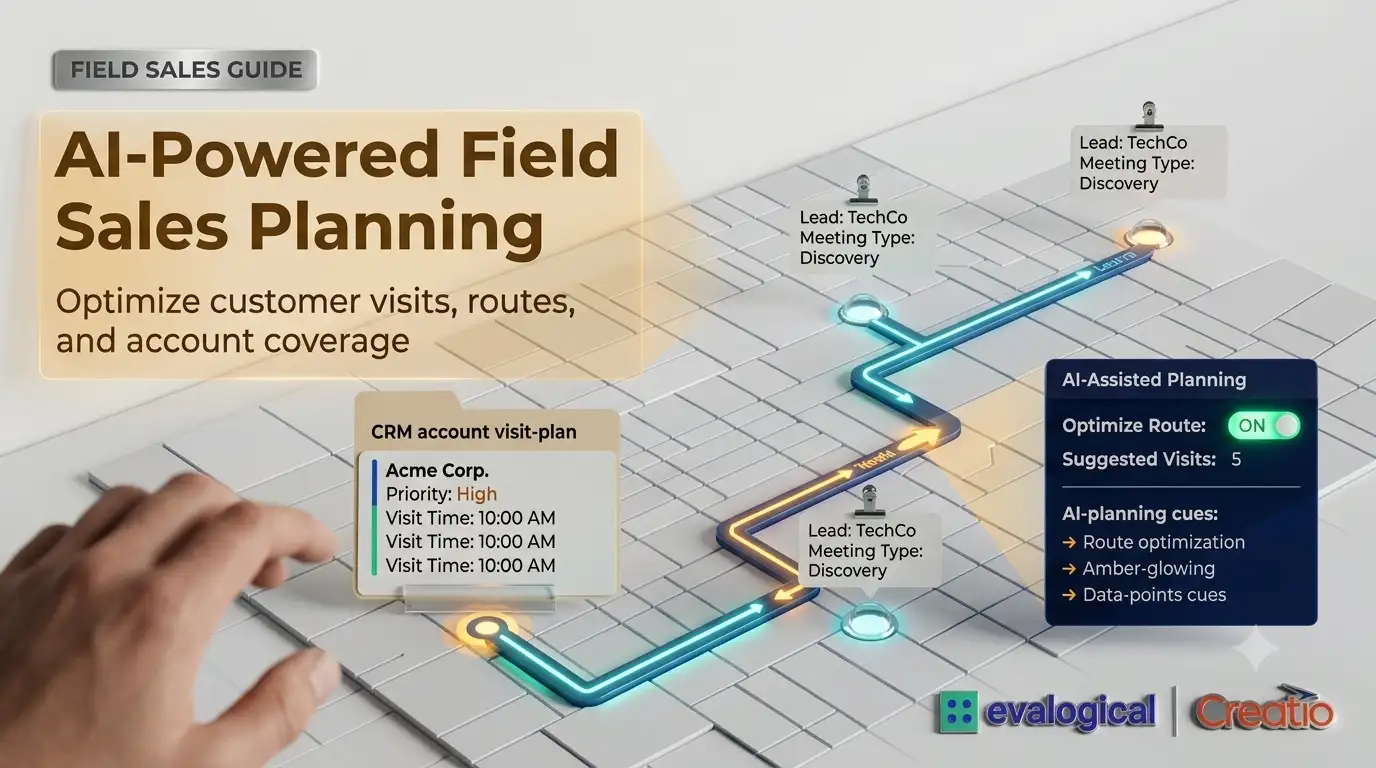 How AI Improves Field Sales Pl....
 How Malaysian Enterprises Can ....
 The 2027 Guide to BNM RMiT Com....


Your Trusted Software Development Company