Before You Sell: How Legacy ColdFusion Erases M&A Value
Published by: Gautham Krishna RJun 02, 2026Blog
The spreadsheets look good. Revenue is climbing. Margins are healthy. The product dominates its niche. Everything is on track for a successful exit.
Then the buyer's technical due diligence team arrives. Within hours, they find what the financials couldn't show: a fifteen-year-old ColdFusion codebase held together with custom patches, undocumented business logic, and a single "hero" developer who knows how the whole thing actually works. The valuation starts sliding.
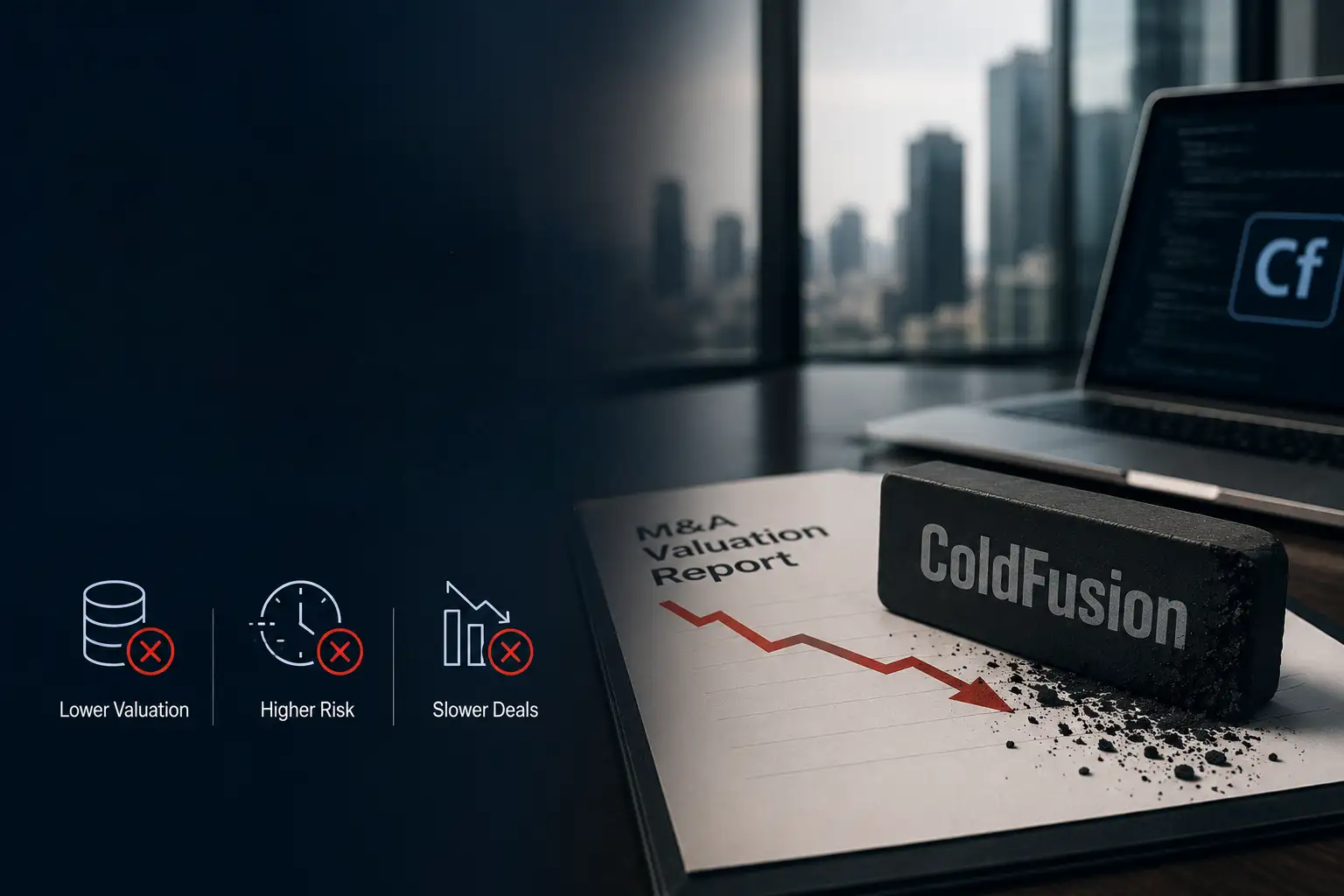
In M&A, technical debt has a direct, measurable impact on valuation -- often far larger than investors initially expect. And for companies running legacy ColdFusion systems, the risk is compounded by end-of-life security exposure, vanishing talent pools, and compliance gaps that scare off buyers. Here's why your ColdFusion architecture might be quietly erasing millions from your exit multiple -- and what you can do about it before the diligence team arrives.
The Hidden Tax Buried in Your Codebase
Technical debt isn't an IT problem. It's an enterprise value problem. It affects your AI readiness, M&A prospects, and cyber resilience. Technical debt can drain enterprise valuation, stall innovation, and weaken customer trust while eroding growth and profitability.
Deloitte's 2026 Global Technology Leadership Study estimates that technical debt accounts for 21% to 40% of an organization's IT spending. For a mid-market company spending $5 million annually on IT, that's $1-2 million burned each year just to keep the lights on -- money that could be funding growth.
The impact on valuation is equally stark. Analyses of M&A transactions show that 31% of acquired codebases carry significant technical debt that materially threatens valuations and post-deal performance. Legacy systems also increase risk-related costs by 300% , with technical debt consuming roughly 40% of the average IT budget.
Private equity firms and strategic acquirers have become ruthless about pricing this risk. They know that every dollar of unaddressed technical debt is a dollar they'll have to spend after closing. That cost comes directly out of the purchase price -- often through direct price adjustments, holdbacks, escrow clauses, or earn-outs tied to remediation milestones.
Why ColdFusion Specifically Triggers Red Flags
Not all technical debt is equal. Some platforms age gracefully. ColdFusion, with its rapid-development roots and specialized talent pool, triggers specific diligence concerns that buyers have learned to watch for.
End-of-life security exposure. If your ColdFusion environment is running on version 2016, 2018, or even 2021, you are operating on software that no longer receives security patches. Extended support for ColdFusion 2021 ends in November 2026 -- and it provides zero security fixes. Each newly discovered CVE becomes a permanent, un-patchable vulnerability. Active exploitation campaigns targeting ColdFusion CVEs from 2023-2024 have been documented, with threat actors deliberately timing attacks for holiday periods when monitoring is reduced.
Vanishing talent pool. Buyers ask: can we staff this system? The pool of developers with deep legacy ColdFusion expertise is shrinking. Acquirers know that inheriting a platform with niche skill requirements means higher hiring costs, slower onboarding, and key-person dependency risk. Heavily indebted systems often rely on a few "hero engineers" who know how things actually work. If those people leave post-acquisition, knowledge walks out the door, velocity drops, and risk spikes.
Compliance and insurance drag. Legacy platforms, delayed patching, and unclear upgrade paths trigger higher insurance premiums, more invasive questionnaires, and slower policy approval. Security ambiguity gets priced in. Regulators ask for evidence. Customers look for encryption, structured logging, and documented controls. A ColdFusion app running behind on versions, carrying light documentation, or relying on in-house tribal knowledge leads to bad optics during diligence.
Integration friction. Strategic buyers need to integrate acquired systems into their existing architecture. ColdFusion's unique runtime and specialized integration patterns complicate that process. Incompatible architectures, fragile APIs, and legacy infrastructure that doesn't scale translate directly into longer integration timelines and delayed synergy realization -- both of which reduce the real return on the deal.
The ColdFusion Diligence Checklist Buyers Actually Use
When a private equity firm or strategic acquirer evaluates a target running ColdFusion, their technical diligence team runs a specific checklist. Here is what they are looking for -- and what vague answers will cost you.
Are ColdFusion versions current? This is the first question. If you are on 2016 or 2018, the conversation shifts immediately to remediation cost modeling. If you are on 2021 extended support, buyers will ask about your upgrade timeline to 2025 or beyond. Unsupported versions are not just a security risk -- they are a valuation discount factor.
Does patch management have documentation? Buyers want to see a predictable, auditable patch cadence. Spotty documentation or reactive patching signals operational weakness and increases perceived risk.
Has your disaster recovery plan been tested? Legacy systems often accumulate DR debt. If you cannot demonstrate a recent restore test with documented recovery times, buyers will assume the worst and price accordingly.
Does key-person dependency exist? If only one or two developers understand the codebase, that is a structural weakness. Buyers will model retention risk and potential knowledge loss into their valuation.
Can ColdFusion modernization move forward without a rewrite? This is the most important question. Buyers want to see a credible, incremental path to a modern, supported platform -- not a binary choice between "do nothing" and "rebuild everything." A phased upgrade strategy with clear milestones and manageable risk is far more attractive than a codebase frozen in time.
When these answers are clear and credible, valuation holds. When they are vague, expect a holdback, a remediation escrow, or simply a lower multiple.
The Real Cost of "We'll Fix It After the Deal"
Many founders assume they can defer technical debt remediation until after closing. This is a dangerous miscalculation.
Buyers model post-close costs into the purchase price. If the diligence team estimates that stabilizing your ColdFusion environment will require $2-5 million in engineering investment, that amount comes directly off the valuation. Worse, if the debt is severe enough, buyers may walk entirely -- or structure the deal with earn-outs that only pay out if you fund the remediation yourself.
The math is unforgiving. A company with a broken CRM implementation requires 90-120 days of remediation before you can even trust the pipeline numbers -- and that is 90-120 days of the hold period consumed by infrastructure work instead of growth. Legacy system dependencies cost an average of $40,000 annually to maintain per system, and integration costs can run three to four times higher than modern systems.
In one documented case, a software company with £6 million in revenue lost a promising acquisition entirely when the buyer assessment concluded: "Your systems are 15 years old and held together with duct tape." The deal died. The valuation evaporated.
A Credible Modernization Path Protects Your Exit
The good news is that you don't need a full rewrite to protect your valuation. Buyers want to see a credible, incremental path to a modern architecture -- not a completed transformation.
Modernization proves you have a plan. A well-run ColdFusion migration -- using a phased, incremental strategy that isolates changes to specific modules and maintains business operations throughout -- signals operational maturity and reduces perceived risk. It answers the buyer's question: "Can we trust that this system won't become a money pit after close?"
Companies with modern, tech-enabled systems command premium valuations, while those burdened by legacy infrastructure often face discounts. Nearly 71% of PE firms invested in digital transformation in 2024, and 67% prioritized AI. Upgrading technology post-acquisition, such as adding AI analytics, automation, and workflow modernization, can transform technical debt into a value-creating asset.
For ColdFusion environments, the path is clear. Migrate to ColdFusion 2025 or a modern alternative. Containerize legacy applications for better deployment. Expose core functions as REST APIs. Modernize the frontend incrementally. Each step reduces technical debt, improves security posture, and builds a narrative that buyers want to hear.
The Bottom Line
Your ColdFusion environment is not just a technical asset. It is a valuation variable. Every unpatched vulnerability, every undocumented business rule, every key-person dependency is a discount factor waiting to be discovered during diligence.
Proactively identifying and addressing technical debt is critical to maximizing valuations and avoiding acquisitions with hidden structural issues. The best time to start modernization was three years ago. The second-best time is now -- before the diligence team arrives and your valuation starts sliding.
FAQs
Q: Can technical debt really impact company valuation during an acquisition?
A: Yes. Technical debt is a major factor in technology due diligence. Legacy systems, unsupported software, security risks, and modernization costs can reduce buyer confidence, increase perceived risk, and lead to valuation adjustments, remediation requirements, or deal restructuring.
Q: Why is ColdFusion often scrutinized during M&A due diligence?
A: Legacy ColdFusion environments raise concerns around security, maintainability, talent availability, compliance, and future scalability. Unsupported versions can introduce operational and cybersecurity risks that buyers must account for when evaluating long-term technology viability.
Q: What questions will buyers ask about a ColdFusion environment?
A: Buyers typically review platform versions, patch management practices, security controls, disaster recovery procedures, developer dependency risks, modernization plans, and the overall maintainability of the application ecosystem. Demonstrating clear governance and a modernization roadmap can significantly improve diligence outcomes.
Q: Should organizations postpone ColdFusion modernization until after an acquisition?
A: In most cases, delaying modernization increases risk. Buyers often factor anticipated remediation costs into the transaction value. Addressing critical security, support, and architectural concerns before a transaction can strengthen negotiation positions and reduce valuation pressure.
Q: What does a buyer-friendly ColdFusion modernization strategy look like?
A: Buyers typically favor phased modernization plans that reduce risk while maintaining business continuity. This may include upgrading to supported platform versions, modernizing infrastructure, adopting APIs, containerizing applications, and incrementally improving architecture rather than pursuing a disruptive full-system rewrite.
Q: How can organizations prepare their technology stack for M&A due diligence?
A: The best approach is to conduct a proactive technology assessment, identify technical debt, document security and recovery processes, and create a clear modernization roadmap. This demonstrates operational maturity and reduces uncertainty during due diligence.
Q: Can Evalogical help prepare legacy ColdFusion environments for acquisition readiness?
A: Yes. Evalogical helps organizations assess legacy ColdFusion applications, identify valuation risks, address security concerns, and build practical modernization strategies that strengthen technology due diligence outcomes.
Q: What services does Evalogical provide for ColdFusion modernization and M&A readiness?
A: Evalogical offers technical audits, application modernization, migration planning, security hardening, performance optimization, API enablement, and legacy system transformation services. These solutions help organizations reduce technical debt, improve operational resilience, and present a stronger technology profile to potential buyers.
The companies with modern, tech-enabled systems command premium valuations, while those burdened by legacy infrastructure often face discounts. Proactively identifying and addressing technical debt is critical to maximizing valuations and avoiding acquisitions with hidden structural issues.



 What Is Creatio CRM? A Practic....
 Salesforce vs. Creatio: Which ....
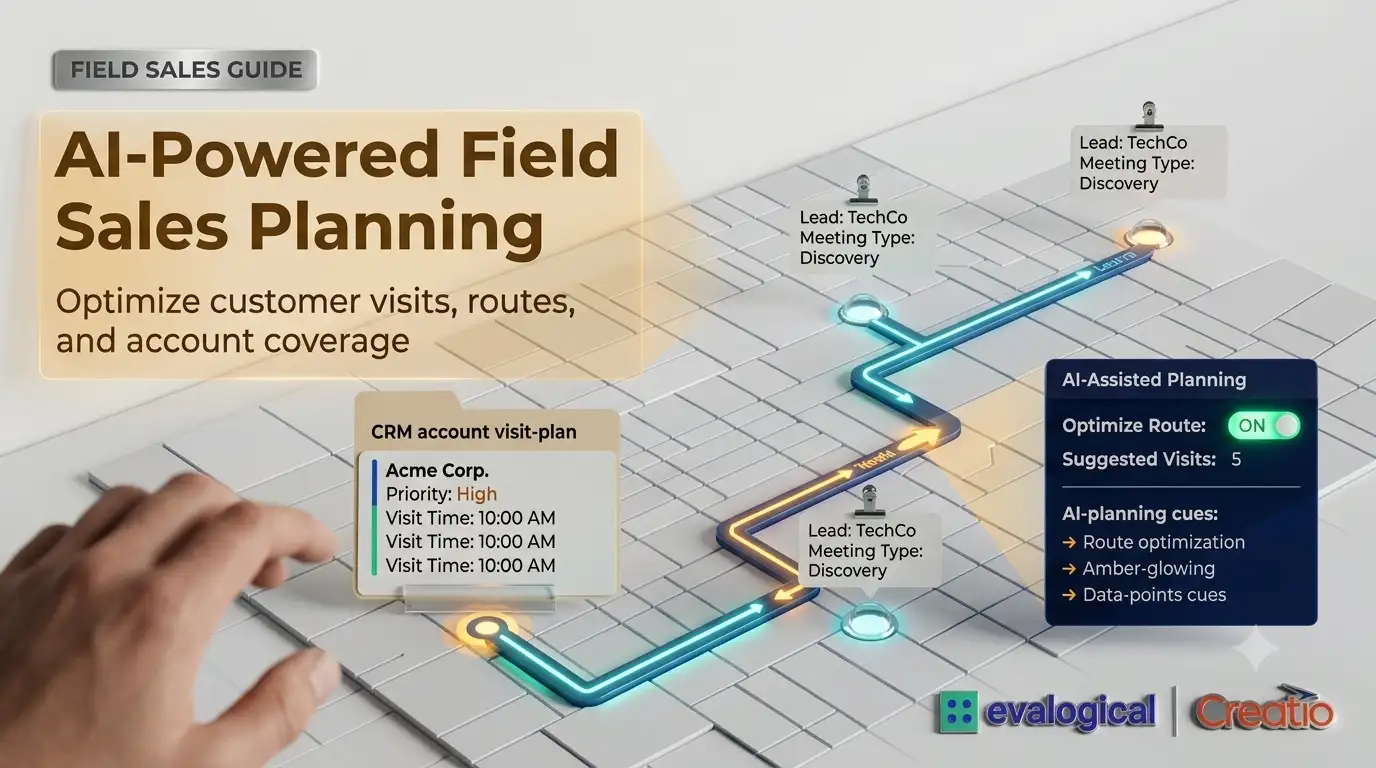 How AI Improves Field Sales Pl....
 How Malaysian Enterprises Can ....
 The 2027 Guide to BNM RMiT Com....

Your Trusted Software Development Company